
Counter-Grammar and the Subversion of Canon
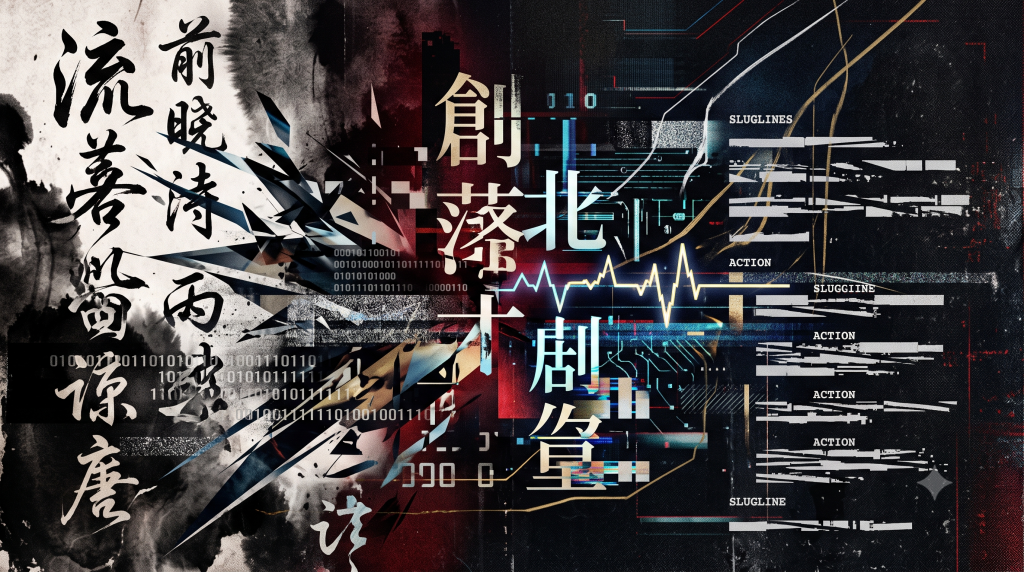
CunningLinguist is a suite of software instruments that deploy artificial intelligence, vector embeddings, multi-lingual translation pipelines, and minimalist interface design to cultivate subversive thought and literary rebellion. Operating at the intersection of software architecture, natural language processing, and critical literary theory, the project turns the smartphone into an engine for counter-canon creation. It captures raw, uncurated human friction—unfiltered streams of consciousness, fragmented grievances, visual collages, and linguistic decay—and transmutes them into poetry, screenplays, and textual interventions that invert and subvert traditional Chinese literary forms.
In the contemporary digital landscape, standard note-taking, productivity, and translation tools operate as systems of cognitive discipline. They demand premature structure, linear categorization, goal-oriented tracking, and semantic clarity, forcing fluid thought into corporate database schemas and standardized linguistic norms. Simultaneously, traditional Chinese literature—from high Tang poetry (shi) to moralizing Confucian drama—has historically functioned as a site of elite cultural authority, state branding, and moral orthodoxy. CunningLinguist destabilizes both vectors. By using machine learning embeddings to constellate chaotic thoughts, translation chains to induce hermeneutic drift, and spatial tracking to anchor dissent, the project transforms the act of writing from a disciplined productivity task into an act of tactical resistance.
The collection operates across three primary axes: Non-Linear Assemblage (resisting productivity metrics through uncurated capture and visual collage), Hermeneutic Drift (weaponizing machine translation to unravel fixed authority), and Locative Dramaturgy (grounding personal grievance in physical geography and polyphonic dramatic dialogue).
I. Non-Linear Assemblage: Resisting Productivity Discipline
The first group of applications addresses the suffocating linearity of standard digital text and organizational software, providing tools for uncurated accumulation and non-linear association.
- StreamNotes
- Mechanism: Captures continuous, uninhibited stream-of-consciousness audio and text sessions, bypassing traditional folder hierarchies and tags by using semantic embedding models to automatically chunk, vector-index, and semantically link raw thoughts for later retrieval.
- Critique: StreamNotes directly critiques the “productivity ideology” embedded in modern knowledge management software. By removing the pressure of prior organization, categorization, and editing, it rejects the capitalist imperative that every thought must be immediately actionable, clean, or structured. It treats the messy, uncensored subconscious as a vital source of political and personal truth.
- Fragmentry
- Mechanism: Provides a stripped-down interface for capturing fleeting poetic fragments, utilizing high-dimensional embedding spaces to uncover hidden thematic and stylistic relationships across disparate notes, auto-constellating them to spur new poetic compositions.
- Critique: Classical Chinese poetry traditionally relied on strict parallelisms (duijin), rigid tonal schemes, and pre-approved nature imagery (shanshui). Fragmentry subverts this canon. Instead of conforming to historical metrics, it uses modern vector mathematics to discover unexpected, non-traditional associations between raw, contemporary fragments—allowing political anger, urban alienation, and surreal imagery to collide into new, resistant poetic forms.
- VisiBored
- Mechanism: Generates uninhibited visual and document “vision boards,” aggregating images, text documents, to-dos, trackers, and uncategorized notes into a non-hierarchical, multi-media canvas for ideas that defy standard text entry.
- Critique: VisiBored parodies and subverts corporate “vision boarding” and habit-tracking cultures. Where modern platforms weaponize visual boards for self-optimization, personal branding, and goal fulfillment, VisiBored acts as a repository for surplus, unclassifiable thought. It embraces clutter, paradox, and incomplete ideas as necessary counter-weights to algorithmic efficiency.
II. Hermeneutic Drift: Weaponizing Algorithmic Erosion
- ReTranslateDrift
- Mechanism: Passes user-entered text through recursive, multi-lingual machine translation chains (e.g., Chinese $\rightarrow$ English $\rightarrow$ Japanese $\rightarrow$ Classical Chinese $\rightarrow$ Chinese), deliberately abusing translation models to generate semantic erosion, unintended poetic metaphors, and structural mutations.
- Critique: State censorship and canonical literature both rely on fixed, authoritative meanings. ReTranslateDrift weaponizes translation noise to perform hermeneutic sabotage. By forcing text through algorithmic round-trips across distinct linguistic structures, it highlights the slipperiness of language, stripping away authoritative tone and revealing how machine translation subtly alters, censors, or distorts human intent. It turns algorithmic error into a generative technique for surreal, subverted literature.
III. Locative Dramaturgy: Grounded Grievance and Polyphonic Satire
The third group anchors personal and collective complaints to specific physical landscapes and dramatic structures, converting abstract discontent into site-specific interventions and dynamic political theater.
- GeoNotes
- Mechanism: Tracks user location to dynamically sort, retrieve, and filter geotagged notes and complaints based on physical proximity, facilitating the creation of hyper-local poetry, location-bound research, and geographically triggered satire.
- Critique: Historically, Chinese scholar-bureaucrats engaged in huaigu (“cherishing the past”)—writing poetry upon visiting historical sites to project state memory and cultural continuity onto physical landscapes. GeoNotes democratizes and subverts this tradition. By binding modern grievances, state critique, and personal observations to exact GPS coordinates, it creates a ghost-layer of digital dissent over physical space, turning the city street or official site into an active canvas for localized protest.
- CineDraft
- Mechanism: Eliminates the complex menus, administrative formatting, and structural overhead of industry-standard screenwriting software, focusing exclusively on frictionless, rapid-entry modal shifts between dialogue, character, and scene beats.
- Critique: Traditional Chinese narrative art and state-sanctioned drama often emphasized monologic harmony, social balance, and moral didacticism. CineDraft treats dramatic dialogue as a chaotic, polyphonic weapon. By lowering the technical friction between a fleeting thought and a formatted script beat, it enables writers to rapidly draft satirical, confrontational scenes that capture the conflicting, dissonant voices of modern society.
Collective Resonance: Code as Counter-Grammar
Collectively, CunningLinguist demonstrates that software interfaces are never politically neutral. Every database schema, tag system, formatting rule, and translation pipeline conditions how we think, write, remember, and speak.
By marrying artificial intelligence and mobile software architecture with subversive literary traditions, CunningLinguist proves that code does not have to function as an engine for administrative discipline, corporate optimization, or state alignment. Instead, mobile software can act as a counter-grammar—a catalyst that transforms scattered thoughts, location-bound anger, visual surplus, and translation noise into new, resistant literary forms capable of challenging both ancient canons and the contemporary zeitgeist.
