
I was in the midst of checking my messages passing through Whitehorse when my phone rang. It was John (Greyson), he would like me to play a part and sing some operatic fugues in his upcoming project Murder in Passing that he would be shooting in a few months time. I said yes, partly because I did not know what my future plans were so my schedule was foreseeably open, and partly because I had sufficient advance warning.
In between my Grand Canyon and West Coast trips, I had received little advance warning (like Fig Trees) from John’s production team that they were commencing the shoot for Jericho (since retitled Photo Booth) the next day, and could I be ready by a certain time. Again, another mad scramble to learn the vocal track I had laid down months before (but had not received nor heard). Jericho was a feature-length extension of sorts from an earlier short I did for John shortly after Fig Trees – The Ballad of Roy and Silo, about gay penguins in a zoo. John claims it was not a prank, but when he asked me to do Roy and Silo, he did so via an email with attachment. I was checking emails during a break at work, and the attachment loaded on my computer – a photograph of two nude male models in penguin masks hanging about (literally) John’s backyard. Thanks to my quick reflexes, I shut it down before too many people glimpsed the NSFW photo. And for those who did, I couldn’t remember what impromptu excuse I gave them to convince them it was not what they thought they saw.
I had an uncomfortable costume in Roy and Silo playing the hoopoe bird, which became even more elaborate and uncomfortable for Jericho. It was so much work to put on and take off (and fragile with hand-crafted paper feathers) that I could not take toilet breaks without disrupting the schedule, nor sit to have my meals or relax. So I held it in, stood and hung around the set between takes the entire day, and observed the interactions between John and the crew. I was teamed up with Alexander Chapman (who starred in John’s earlier film Lilies), with whom I shared a scene tangentially in Fig Trees, who now played the lead (and boss of the hoopoe bird).
I was again teamed up with Alex for Murder in Passing, playing the homophobic cop to their transgender detective. I provided my own singing voice for the opera interludes, whilst the other characters lip synced to other singers. Having returned from the Yukon, and strengthened my resolve to complete Stille Stadt, I was more deliberate and focused in observing how John and the crew operated. John already ran a lean and rather scrappy ship, but he had access to student labor from the university. There were inefficiencies in the process and staffing that I could not afford, plus there were more scenes and more locations which spanned 42 episodes for Murder in Passing. Through these observations, I formulated my own pared-down approach to location scouting, directing, crew and logistics planning that shaped the form Stille Stadt would take.
I was weary after Murder in Passing; the otherworldly man-sings-high roles that John cast me in were not that different from the otherworldly Baroque operatic roles I was saddled with before I walked away. Besides, being an opera singer was never one of my childhood dreams; my youthful fantasy was to be a concert pianist so unbecoming that everyone thought the janitor had wandered on stage by mistake, before sitting down with one leg up on the piano stool like an uneducated coolie playing mahjong and blowing the minds off the pretentious (mostly white) audience when I started playing. I started training to become an opera singer because my ex Erik told me to; partly to use me in his church choir and show off, partly (I suspect largely) so he can assign a label to my unconventional voice, to shape it in terms he can grasp.
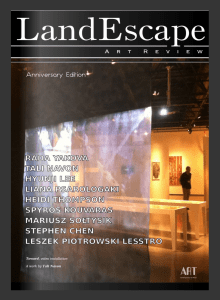
My recitals were technically performance art masquerading in the recital form, as they were never about pleasing audiences or showing off my voice, but communicating political viewpoints through guise of repertoire. I might as well go all in and signed up for an intensive workshop. There was a public performance at the end of the workshop, where each participant had to put together and present a 15 minute performance piece. Although I began the workshop with a rejection of my opera training, I found myself thinking about my singing Bellini and the grizzly bear encounter in the Yukon as I evolved my understanding and techniques. I was also inspired by the performance space which was setup like a classroom (or was a classroom) and decided the way forward was not in mere rejection, but in reintegration and reimagination of my unique experiences and talents. I drew parallels between the discipline of vocal training with the disciplining of expression in authoritarian regimes; striving for the uniform voice and striving for the uniform populace. The end result was The Schooling of Desire which later got featured in as special edition of LandEscape Art Review along with my Bounded Nature photo series.
Inter-Mezzo
Leaving a documentary film festival, I was irked by the self-aggrandizement of the filmmakers and the sycophantic audiences. They were such “good” people, raising “awareness” for “important” issues; when in reality, they were trading on the sufferings of others to bolster their privileged positions. This spurred the conception of my first film after my 12-year hiatus, INTER-MEZZO, an experimental documentary that expanded on the theme of Schooling of Desire, which traced my journey as a male mezzo (I firmly reject the ahistorical countertenor moniker), faced with prejudice and marginalization back in Singapore, and later in North America; the schooling and suppression of my voice interwoven with my experiences of colonialism and exile.
Just as my graduate thesis subverted and called upon the biased construction of truth in the thesis form; Inter-Mezzo repurposes and subverts the tropes of documentary and brackets the pimping aspect by making the filmmaker the subject. Instead of celebrating or idolizing Asian artists on Western stages (such as Sumi Jo) who succeeded by conforming to Western standards, it instead confronts rigid Western standards and their biases. How I wanted the unique nature of my voice and its cognitive dissonance as a tool to disrupt and comment on other conventions (in early recitals, I would do things like sing a German lieder followed by a jazz torch song, to highlight how male ideals of female behavior/hysteria had not changed through the centuries). Instead the otherness of my voice became normalized, conformed to what I should sound like, and shoehorned into an ill-fitting categorization and its “standard” (limited) repertoire.
I walked away from it all, from acceptance when I realized I was no longer in control of my voice. My voice is what is genuine, what comes from inside of me, an extension of my self. So what if I don’t conform to categories or standards, I am not at fault for one’s lack of imagination or understanding. Why am I limiting and killing myself just to be like anyone else? Just to belong to a community? The panacea for both fascist propaganda and liberal discourse. Let’s see: Tommy and Eric went on the same Tahoe ski trips, Marcus and Erik frequented same clubs and dance parties and shared entourages of simpering asians. Even for Layne, the rare person I shared similar views with, whom I really liked, I was the convenient in-between and fuckable tech support; like the Jewish expatriate in Singapore who requested me each time his partner went on a business trip. Be it gay, academic or art cliques, there was no escaping the circle jerk of white superiority and fetish. I am always an outsider. Why should I have to bend over to fit your categories and veiny cocks? I don’t want to belong, I don’t need to belong. I don’t create for your sake or approval, I create to express the unexpressed, I create as a means to cope. On a memo, I wrote “Don’t seek validation from the adulation of fools.”
F*ART
After completing INTER-MEZZO (which won best documentary Asians on Film film festival and a finalist in HK Underground Film Festival), I decided to rebuild my art/film CV partly to better my chances of getting a grant for STILLE STADT (since I did not qualify as an “emerging artist” due to lack of “Canadian experience”), and partly to show them and stick it to the Canadian arts organizations. This I kicked off my F*ART meta project counterposed to the general dross of art academia, “community”, criticism and the overhyped, reified and commoditized big “avant-garde” art events of 2013 in Toronto (such as the indulgent twee tableaux of Marina Abramovic, and the quasi-political posturing of Ai Weiwei). F*ART was an experiment and exploration of the possibilities of producing anti-art – art against establishment, and the institution of art itself.
During the 1 year period I completed and exhibited an average of 2 new works each month that span different forms, styles and concerns. I was possessed by mania, by anger, by resolve, by desperation, by fear of soon going blind, by need to express what had been oppressed. I had to prove myself, not for validation from art cliques and institutions, but to prove my vision is not bipolar grandiosity and my talent not bipolar delusion. I was possessed to assert my own path, route-finding my way across the unknown, finding a space to operate outside categories, cliques, credentials etc. vs. following well-trodden dead-ends like I did when I got lost and lost again traversing the Gems route of the Grand Canyon. It was a lesson and a metaphor in life in work in art, critiquing and fighting conventions that suffocate, demoralize, close off; not defaulting to the only “right” way, but finding a better way.
As I write this, I realized in retrospect that my genre-breaking. finding my own way quest for transcendence is linked to my conditions and my treatment. Not in the psychobabble manner of how psychopaths delight in breaking norms and getting away with it because they are beneath us. No, it is the constant struggle to transcend my condition, transcend the imposed categories and conventions that constrain me; in short through my art, transcend the limitations of my self and my life. Pushing and fighting to make my space my place in this world, I am avant-garde – not just style or self-ascribed; I cannot be anything else. However, even “experimental” has become stylistic gloss hence my work works do not appear overtly “experimental”. Instead of trying to look/sound like something else, I tried to redefine the experimental form by blurring the lines between “conventional” and “experimental”, “high” art and “low” art to question the institution of art itself and its pretentions, and generate new criteria for evaluation on its own terms vs. applying superficial standards of quality/universality which are hardly ever. The rejection of the superficial and drive towards authenticity became an obsession, partly due to growing up in an oppressive regime where censorship is rife, and partly because my true self was hidden under the coping mechanisms of bipolar disorder and schizoid disorder, dissociated from others despite appearances of conformity and connection. Allegory became the device in my work to encode my double lives, the latent meaning below the surface, to surface the hidden for those willing to uncover it. I know it is not “normal”, but normal is just surface, mere appearance – not an authenticity nor standard to aspire to.
Proza(i)c (Li)tany.
What does glorious “normal” spell,
Lucid (from Dying Prayers)
but be f***ed up like everyone else?
PACED
At the back of my mind was the constant worry that my work and I would be forcibly pigeon-holed by the categories and labels (e.g. “queer”, “asian”, “immigrant” etc.) that pervade art institutions, festivals and their curatorial committees, which served to segregate and apply subjective qualitative markers and tropes. I was getting used to (and expected) constant rejections from them, but it was still dispiriting and demoralizing nevertheless even though I continued to focus on creating new work. My personal breakthrough came when PACED was accepted by vKunst festival in Frankfurt, I had broken out of the Asian and Asian Film category. It was also validating as PACED was a hybrid “tone-poem” short that explores the different dimensions of pace (as speed, as measure, as rubric for containment) in the city; in short an experiment in form and feasibility for STILLE STADT. It also had a special bunny connection; when I was recording the part of the soundtrack where I sang Jerome Kern’s “Why was I Born?”, I heard a hurried scrabble when I played the opening chords as Bella rushed into the room and stopped in view of the keyboard, Thumper followed suit and they both settled down to listen and watch me record the song. With an audience like that, who needs to appeal to philistine people?
Although money was tight, I decided to make a trip to Frankfurt to experience vKunst. I had wandered around the street and watched all the works, when I returned again to the shopwindow that was projecting PACED to take in the experience again. A man approached and stood next to me and we watched it together for a while in silence “This is one of my favourite works,” he said “It is very interesting”. I thanked him and introduced myself as the artist. He introduced himself as one of the curators and organizers of vKunst. He had some questions about the work, so we stood around and chatted for a while. I congratulated him on the festival and he said it had been rather challenging as they had an extraordinary year, having received an unprecedented volume of submissions from around the world. As we parted, he hesitated “I shouldn’t be telling you this, but out of the hundreds of submissions we reviewed, yours was in the Top 10. Good work.”
I was glad I made that trip, his parting comment would sustain me through countless rejections; not because it was a validation of my talents, but because there were people out there who get what me and my work was trying to express. Whilst in Frankfurt, I began experimenting with a new art practice integrating my travels with historical contexts of place through a series of guerrilla site performances; most notably Gebrochengel – an extended guerrilla performance that lasted 3 hours in a sketchy area. Yet despite getting exhibited and awarded internationally, my work was constantly rejected by insular and cliquish Canadian curators, which became the impetus to start Censured In Canada film festival for artists like me. I wanted to set an alternate precedent, prove to them our work had value and recognition; we did not need their approval, nor did we need to suck up to them.
Some accept unjust unfairness,
Praxis (Futile Overtures)
others gripe, others write letters,
I shit art and film festivals.
On the basis of the outlines for Stille Stadt and Rain Shadow, I was selected as one of Reelworld’s Emerging 20 filmmakers. In hobnob sessions with film and media professionals, everyone told me I should not do Stille Stadt: it flummoxed them, beyond their limited realm of comprehension. Their advice did not faze me, I was used to it — I had received the same reactions with my graduate thesis and innovations at work. I continued working on the script for Stille Stadt, and scouting for potential locations. With my updated portfolio, script and project plan, I resubmitted my grant application for Stille Stadt, a year from my original rejection.
I heard back from both grant committees shortly after the closing date. Half-expecting to hear the same rejection that I was not eligible as an “emerging artist” as a year ago, I was taken aback when informed instead I was overqualified for the “emerging artist” category and the “mid-career artist” category and I had to rework my grant proposal in less than a day to resubmit it in the “established artist” category, where I now had to compete with pros and veterans who had experience in getting grants, and familiar names to artists who sit on grant committees. I knew my chances were slim but I had come so far; so I gritted my teeth, reworked my proposal and budget (scaling them out to the new budget guidelines was no easy feat), and resubmitted them.
When the grant letters arrived, I was rejected by the federal grant one but was awarded the maximum for the provincial one. Against the odds, I had managed to secure a grant on my first pass. However I still had to do some creative restructuring, replanning and rebudgeting since my proposal budget was based on both grants which was effectively halved since only one grant was awarded (though still a lot more than if I was awarded both grants as an “emerging artist”). The original plan was for me to provide the operatic arias that an actor would internalize as the Everyman. However, after multiple failed auditions I realized that I was the only person who could play Everyman, having fully internalized it and the arias. However this would necessitate reworking the script and production plans and schedules.
As I rewrote the script, auditioned more actors, put together a skeleton crew, secured equipment and locations, and planned shooting schedules, I realized with some more creative scheduling and location planning it was possible to reuse the actors waiting around for their scene to make another film which I could shoot guerilla-style while my DP (Director of Photography) was setting up for Stille Stadt. In just a few weeks, I conceived a companion triptych Contentus and banged out the scripts that comprised it like a maniac processed. The films that comprised Contentus like Stille Stadt were transmutations of my experiences: A MOOR – a claustrophobic amalgamation of white men with an invisible Asian escort in a hotel room, BLISSED – expresses the racism latent behind charity and the treatment of immigrants (who become trapped), and IN DIFFERENCE a collision and meditation between young and old, privileged and homeless, present and future selves. Over a two week shooting period across multiple locations on a limited budget, I managed to create not one, but two feature-length avant-garde films whose thematic and characters mirrored the other but had wildly different structures and scripts.
CONTENTUS and STILLE STADT were exhibited and awarded internationally and I won a Best Director award for Stille Stadt (which even got a nice review). I had accomplished what I set out to do, my talent and ideas cannot be dismissed as mere bipolar delusion. I accomplished more than anyone could, and that I never could in Singapore. My mother had to give up on university so her brother could attend, my father aspired to be a draughtsman but was relegated to a technician. This was a vindication of my years of suffering; I would have been much lesser if I’d stayed in Singapore, I would have been much lesser if I stayed in those dead-end jobs, or conformed my life to my exes, and did what was “right”. I had transcended my destiny even though I had fallen. I had gotten here through my own power, through my own work, without support, without credentials, without connections, without “community”, without advantages. Everything seemed possible, even the impossible task of finding someone who loved me for who I am, and appreciates what I do and need to do.
<< CRATERING – EJECTA | GEOLOGY OF HEARTBREAK | LANDSLIDE >>